
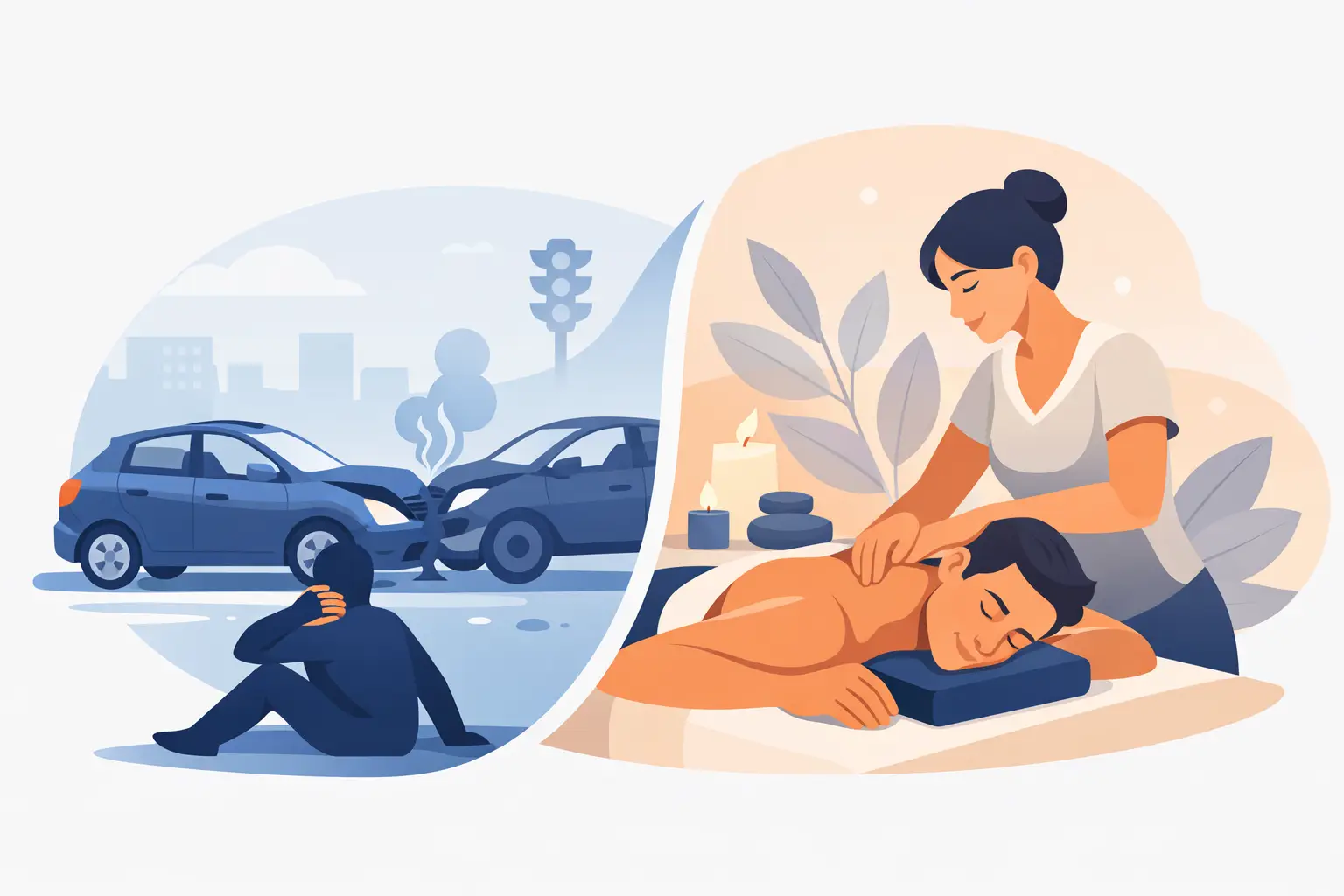
A car accident can leave you sore in places you did not expect. You may walk away feeling shaken but mostly fine, then wake up a day or two later with a stiff neck, aching back, headaches, or pain when you turn your head. Massage therapy after car accident injuries can be a valuable part of recovery, but the right timing and approach matter.
A skilled massage therapist does more than work on the spot that hurts. They assess how your muscles are responding to the collision, adapt pressure to your comfort and stage of healing, and help restore movement without pushing an irritated body too hard. When coordinated with chiropractic care and other appropriate treatments, massage can support a more complete recovery plan.
Why pain can appear after a collision
Even a low-speed crash can place sudden force on the body. Muscles may tense instinctively during impact, while the head, neck, shoulders, ribs, hips, and low back absorb or compensate for the motion. This can contribute to whiplash-associated symptoms, muscle strains, joint irritation, bruising, and protective muscle guarding.
Adrenaline can also mask discomfort immediately after an accident. Once that response fades, inflammation and tightness may become more noticeable. It is common for symptoms to shift over several days as the body compensates. Neck pain may lead to shoulder tension; low-back stiffness may alter how you walk; headaches may be connected to tight muscles around the neck and upper back.
That does not mean every ache is minor. New or worsening symptoms deserve proper attention, especially after trauma.
Is massage therapy after a car accident safe?
Massage therapy after a car accident is often appropriate when it is provided after an informed assessment and adjusted to the patient’s condition. The goal in early care is not deep, aggressive work. It is to reduce unnecessary tension, support circulation, calm an overprotective nervous system, and help you move more comfortably.
Before beginning massage, a practitioner should ask about the crash, your symptoms, medical history, medications, and any diagnoses or imaging you have received. They should also understand whether you have been assessed by a physician or other qualified healthcare provider. This information helps determine whether massage is suitable now, which areas require caution, and what techniques are appropriate.
Massage may need to be delayed or modified if there is a suspected fracture, severe bruising, open wounds, acute infection, blood-clot risk, neurological concerns, or significant swelling. Seek urgent medical attention for symptoms such as loss of consciousness, confusion, severe or increasing headache, vision changes, chest pain, shortness of breath, weakness, numbness, loss of coordination, or bowel or bladder changes.
What massage can help with during recovery
The benefits of massage are practical: less muscle guarding, improved comfort with daily movement, and a better ability to participate in active rehabilitation. Gentle techniques can help address tension in the neck, shoulders, mid-back, hips, and legs without treating the body as a collection of separate painful spots.
For many people, treatment also creates a useful pause from the stress response that follows a crash. Pain, poor sleep, and anxiety can keep muscles tense long after the immediate danger has passed. A calm, well-paced session may help the body settle, which can make breathing, resting, and moving feel easier.
Improved tissue mobility is another potential benefit. After an injury, people often avoid painful movement and develop compensations. A therapist may use focused soft-tissue work, gentle range-of-motion techniques, and home-care recommendations to help restore more natural movement. Progress is rarely linear, however. Some soreness after treatment can occur, particularly early on, and should be mild and short-lived rather than intense or escalating.
Massage is not a substitute for medical evaluation, and it cannot repair every injury on its own. If joint dysfunction, nerve irritation, concussion symptoms, or a more serious structural injury is involved, recovery may require additional care. That is why an integrated plan is often more effective than relying on one treatment alone.
Timing matters more than rushing
There is no universal rule that says you must start massage immediately or wait a certain number of weeks. The best time depends on the nature of the accident, your symptoms, and the results of your assessment.
In the first days after a collision, a gentle approach may be best if massage is appropriate at all. Sessions may focus on comfort, relaxation, and light work around guarded muscles rather than intense pressure directly over painful tissue. As acute irritation settles, treatment can evolve to address persistent tightness, reduced range of motion, and movement patterns that are slowing recovery.
Starting too aggressively can flare symptoms. Waiting too long can allow stiffness and fear of movement to become more entrenched. The right plan meets you where you are, then changes as your body responds.
What a personalized treatment plan may include
At Pulse Health, massage therapy can be coordinated with other conservative treatments when clinically appropriate. A chiropractor may assess joint movement and spinal mechanics, while a registered massage therapist focuses on muscle tension and soft-tissue function. Acupuncture, cold laser therapy, or rehabilitative exercises may also be considered based on your symptoms and goals.
This team-based approach matters because accident injuries are rarely identical. One person may have neck stiffness and tension headaches. Another may have low-back pain from bracing at impact, or hip discomfort that appears only when climbing stairs. A plan should account for how you work, sleep, drive, exercise, and move through daily life.
What to expect at your first appointment
Your first visit should begin with a conversation, not an assumption. Be ready to describe when the accident happened, where you feel pain, what movements are difficult, and whether symptoms have changed. Mention headaches, dizziness, tingling, sleep disruption, anxiety, and any care you have already received. These details help your provider make safer decisions.
During treatment, communicate clearly about pressure and comfort. Therapeutic massage does not need to be painful to be effective. If an area feels sharp, burning, numb, or unusually sensitive, say so right away. A good therapist will adjust the technique, positioning, or focus of the session.
You may leave with simple recommendations such as gentle mobility exercises, heat or cold guidance, hydration, posture changes, or advice on pacing your return to work and activity. Follow the plan you are given, but pay attention to your response. Contact your provider if symptoms significantly worsen or new symptoms appear.
Supporting recovery between sessions
Massage works best when it is part of consistent recovery habits. Avoid the urge to either stay completely still or force yourself through pain. Short, frequent walks and comfortable movement can be helpful for many soft-tissue injuries, while heavy lifting, high-impact exercise, and sudden twisting may need to wait.
Sleep can be challenging after a collision, particularly with neck or back pain. Supportive positioning, regular movement breaks during the day, and a gradual return to normal routines can make a meaningful difference. If driving aggravates symptoms, adjust your seat, take breaks when possible, and discuss the issue with your care team.
Keep your appointments and reassess your progress. Recovery should be measured by more than pain on one particular day. Consider whether you can turn your head more easily, sit through a workday with less discomfort, sleep better, return to exercise, or feel more confident moving again.
A car accident can disrupt far more than your schedule. Thoughtful, individualized care can help you feel supported while your body regains comfort, mobility, and trust in movement.