
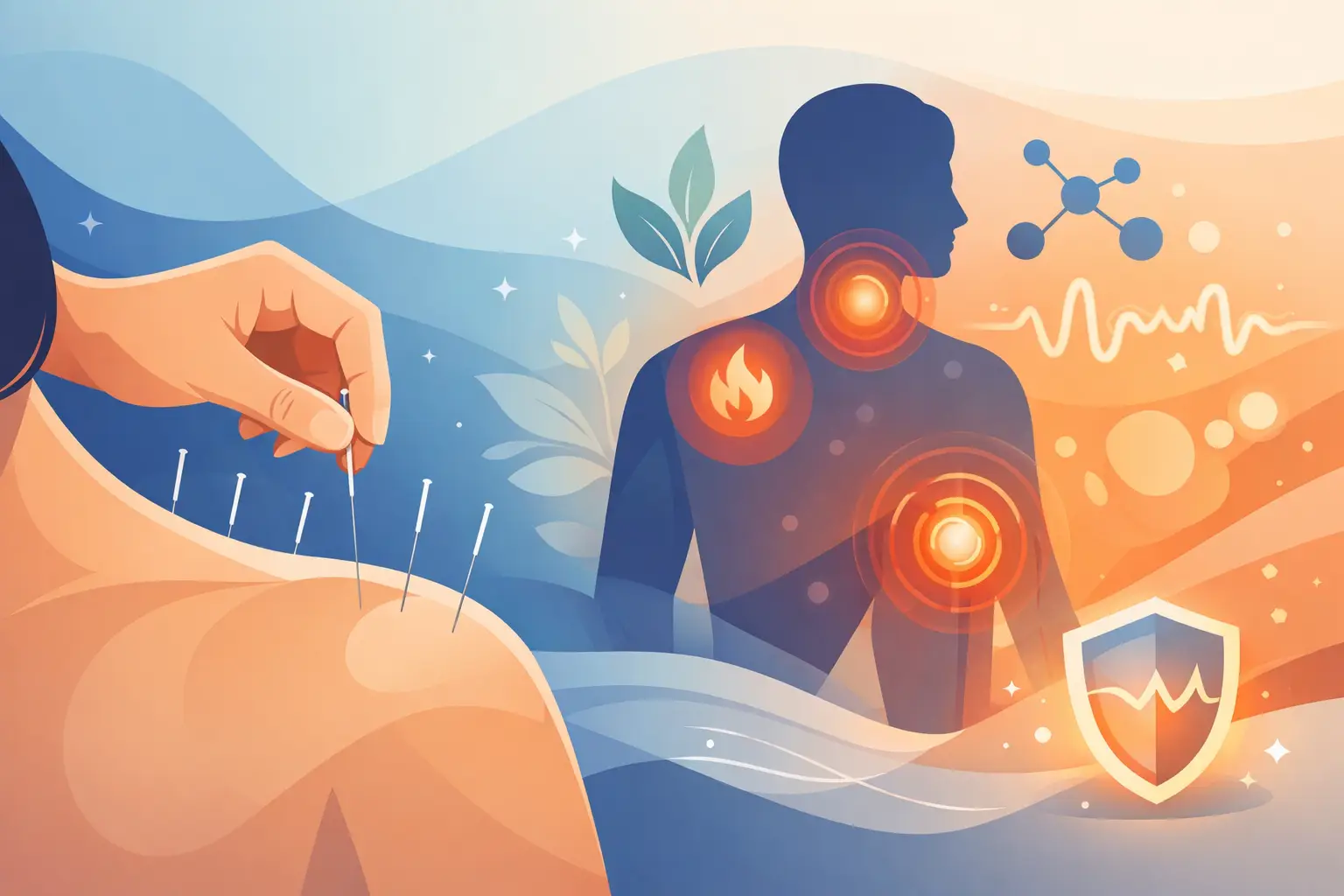
A shoulder that aches after a desk day, a knee that stays puffy after a run, or a back that tightens every morning can make even simple movement feel like work. Understanding how acupuncture reduces inflammation can help you decide whether it may have a place in your recovery plan, especially when pain, stiffness, and limited mobility are keeping you from the activities you enjoy.
Acupuncture is not a quick fix for every painful condition, and it does not replace medical care for serious illness or injury. But when it is provided as part of an individualized plan, it may help calm pain sensitivity, support the body’s regulation of inflammatory processes, and make movement more comfortable while tissues recover.
What inflammation actually does in the body
Inflammation is part of the body’s normal repair response. After an ankle sprain, strenuous workout, repetitive work task, or other tissue stress, the immune system sends chemical messengers and fluid to the area. This can create heat, swelling, tenderness, and stiffness. In the short term, this process helps protect and repair damaged tissue.
The problem is not that inflammation exists. The problem is when it becomes prolonged, excessive, or paired with pain that causes you to move less and compensate more. An irritated shoulder can lead to guarded posture. A painful knee can change the way you walk. Over time, those adaptations may place extra stress on other muscles and joints.
Some conditions are driven largely by mechanical overload, while others involve arthritis, autoimmune disease, infection, or another medical cause. That distinction matters. Acupuncture can be a supportive therapy for many musculoskeletal concerns, but ongoing swelling, unexplained pain, fever, significant weakness, or symptoms after a major injury should be assessed by an appropriate medical professional.
How acupuncture reduces inflammation in practical terms
Acupuncture uses very thin, sterile needles placed at specific points on the body. The goal is not simply to treat the spot that hurts. A trained practitioner considers your symptoms, movement patterns, health history, and the way your nervous system may be responding to pain.
Research suggests acupuncture may influence inflammation through several connected pathways. The effects can vary by condition, treatment approach, and individual response, so it is more accurate to view acupuncture as a tool that supports regulation rather than a treatment that switches inflammation off.
It may influence inflammatory signaling
When tissue is irritated, the body releases signaling proteins called cytokines. Some cytokines promote inflammation, while others help resolve it. Studies have found that acupuncture may influence these pathways and encourage a more balanced inflammatory response in certain pain conditions.
This is one reason acupuncture is often considered for persistent musculoskeletal issues, such as neck pain, low back pain, tendon irritation, and osteoarthritis-related discomfort. Still, the research is not identical across every condition. Results depend on the diagnosis, the quality and frequency of treatment, and whether the source of irritation is also being addressed.
It can help regulate the nervous system
Pain and inflammation do not operate independently from the nervous system. When pain continues for weeks or months, the nervous system can become more alert to threat. Muscles may tighten, sleep can suffer, and ordinary movement may feel more painful than expected.
Acupuncture may stimulate sensory nerves that communicate with the brain and spinal cord. This can affect how pain signals are processed and may support activity in the parasympathetic nervous system, often described as the body’s rest-and-recover state. For some patients, that means less muscle guarding, better sleep, and a greater ability to tolerate the movement needed for recovery.
It may create local effects around painful tissue
Needle stimulation can also produce local changes in the area being treated. These may include increased circulation and the release of substances involved in pain modulation, such as adenosine. Better local blood flow does not automatically heal an injury, but it can support the delivery of oxygen and nutrients while helping the body clear metabolic byproducts from active or irritated tissue.
This local response may be especially relevant when tight, sensitive muscles are contributing to pain around a joint. For example, hip discomfort is not always only a hip problem. Overactive muscles in the low back, glutes, or thigh can alter how the hip moves and keep the area under strain.
It may reduce the pain-inflammation cycle
Pain often creates a self-perpetuating cycle: pain limits movement, limited movement increases stiffness and weakness, and those changes make activity more uncomfortable. Acupuncture may help interrupt that cycle by reducing pain enough for a person to begin moving more normally.
That is where treatment becomes more useful than symptom relief alone. If a patient feels better after acupuncture but returns immediately to the same aggravating workload, training error, or poor movement pattern, the irritation may return. Lasting progress usually requires a plan that includes appropriate mobility work, strengthening, load management, and guidance on daily habits.
What conditions may respond well?
Acupuncture is commonly used as part of care for low back and neck pain, tension-related headaches, shoulder pain, knee osteoarthritis symptoms, hip discomfort, repetitive strain concerns, and sports-related muscle or tendon irritation. It may also help people whose pain is affecting sleep, stress levels, or their confidence with movement.
The best candidates are not defined by a single diagnosis. Someone with a recent strain may benefit from short-term treatment to manage discomfort while healing. Someone with chronic pain may need a longer course focused on calming sensitivity, restoring mobility, and building strength. An athlete may use acupuncture alongside manual therapy and progressive rehabilitation to stay active without repeatedly aggravating the same area.
There are limits. Acupuncture cannot repair a complete tendon rupture, stabilize a fracture, or treat a joint infection. It should also be coordinated carefully if you take blood-thinning medication, have a bleeding disorder, are pregnant, have an implanted electrical device, or have complex medical conditions. A qualified practitioner can review these factors before treatment.
Why an integrated plan matters
Inflammation is often a response to a problem, not the whole problem itself. Treating only the inflamed area can miss the factors that caused it to become overloaded in the first place.
At Pulse Health, acupuncture can be considered alongside chiropractic care, massage therapy, shockwave therapy, corrective exercise, or other appropriate services based on your needs. A runner with knee pain, for instance, may need symptom relief, but may also benefit from an assessment of hip strength, foot mechanics, training volume, and recovery habits. A person with neck pain from computer work may need acupuncture for muscle tension while also improving workstation setup, posture tolerance, and upper-back mobility.
This does not mean every treatment should be used at once. More care is not always better care. The right plan is the one that fits your diagnosis, goals, preferences, and capacity to follow through.
What a treatment visit can feel like
Before treatment, a practitioner should ask about your symptoms, health history, medications, activity demands, and goals. They may assess your movement and palpate areas of tenderness or tension. Needle placement may be near the painful area or in related areas elsewhere on the body.
Most people describe the needles as a brief pinch or little more than a sensation of pressure. You may feel warmth, heaviness, tingling, or a dull ache around a point. Treatments commonly last 20 to 40 minutes once needles are placed, though appointment length varies.
Some people notice a change after their first visit, while others need several sessions before they can judge whether acupuncture is helping. Mild soreness, small bruises, or temporary fatigue can occur. Severe or worsening symptoms are not typical and should be reported promptly.
Making the benefits last beyond the table
Acupuncture is often most effective when it helps you return to the activities that support recovery. That may mean taking short walks without guarding your back, completing a prescribed strengthening program, sleeping more comfortably, or gradually returning to sport.
Your practitioner may recommend temporary activity modifications rather than complete rest. With many musculoskeletal problems, total inactivity can increase stiffness and reduce tissue tolerance. The goal is usually to find a manageable amount of movement that challenges the body without repeatedly flaring symptoms.
If pain or swelling has been holding you back, a thoughtful assessment can clarify whether acupuncture belongs in your care plan and what needs to change for your body to move with greater confidence again.