
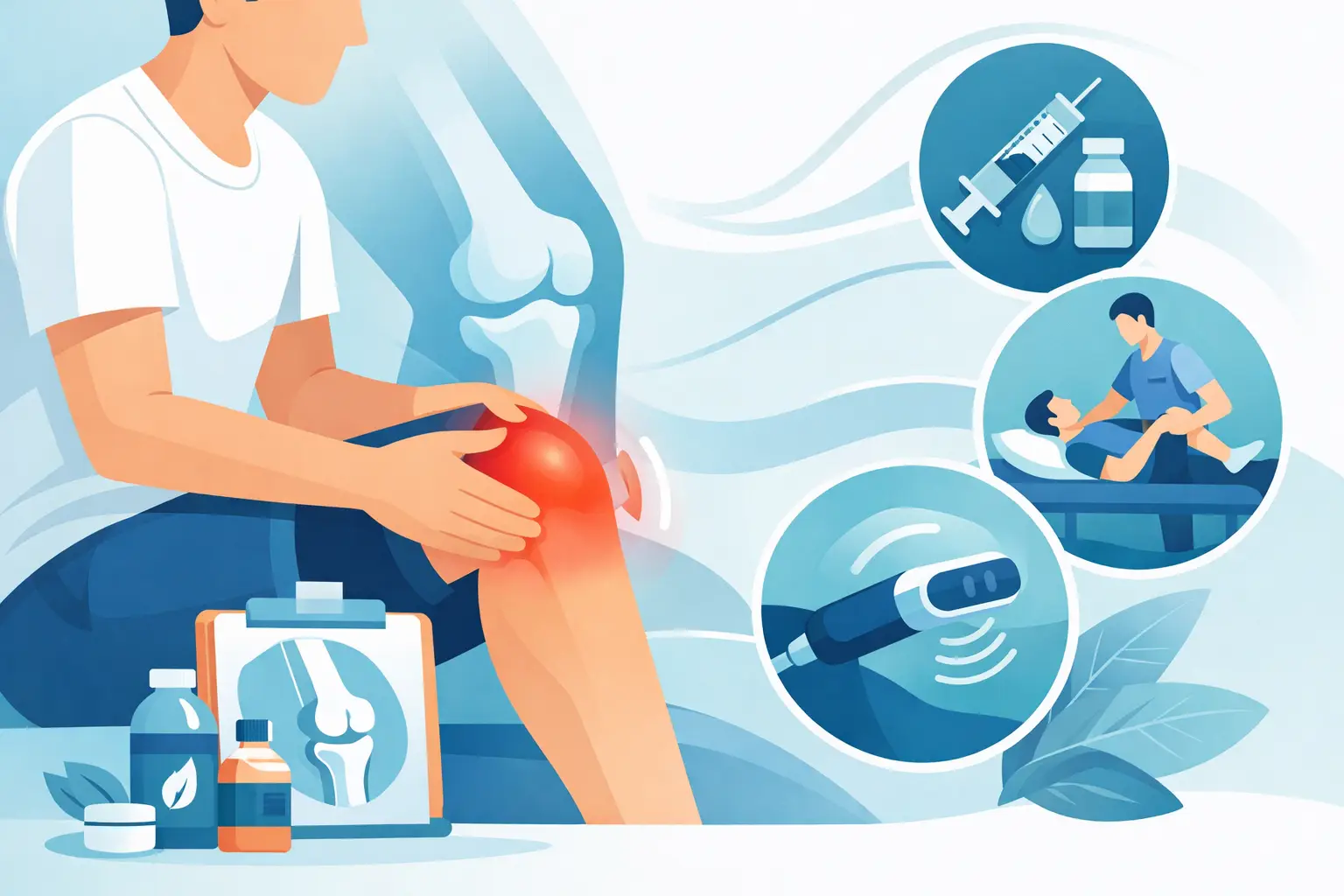
Knee pain has a way of shrinking your day. Stairs become something to plan around, a walk with friends feels uncertain, and getting up from a chair can bring a sharp reminder that something is not moving as it should. The best non surgical knee pain treatments do not start with a one-size-fits-all procedure. They start by identifying why your knee hurts, what activities matter most to you, and which combination of care can help you move with more confidence.
For many people, surgery is not the first or only answer. Whether pain began after a sports injury, a workplace strain, years of wear and tear, or a sudden increase in activity, conservative care can often reduce symptoms and improve function. The right plan may include movement rehabilitation, hands-on treatment, targeted therapies, and practical changes that protect the knee while it recovers.
Start With the Cause, Not Just the Pain
“Knee pain” is a symptom, not a diagnosis. Osteoarthritis, a meniscus injury, patellar tendinopathy, kneecap tracking issues, ligament sprains, bursitis, and pain referred from the hip or lower back can all feel different – and sometimes surprisingly similar.
That distinction matters because a treatment that helps one condition may be less useful for another. For example, shockwave therapy may be considered for certain chronic tendon conditions, while a gradual strengthening program is usually central to managing knee osteoarthritis or patellofemoral pain. Orthotics may help when foot mechanics are contributing to knee stress, but they are not a universal fix for every painful knee.
A thorough assessment should look at your gait, range of motion, strength, work demands, sport or exercise habits, previous injuries, and how the knee responds to loading. Imaging can be useful in selected cases, but an X-ray or MRI result should be interpreted alongside your symptoms and physical examination. Many imaging findings are common even in people without pain.
Best Non Surgical Knee Pain Treatments for Lasting Relief
The most effective treatment is often a coordinated plan rather than a single modality. Your needs may change as pain settles and your capacity improves.
Progressive exercise and movement rehabilitation
Exercise is one of the strongest non-surgical options for many common knee problems. This does not mean pushing through sharp pain or being told simply to “work out more.” It means a measured program that builds the strength and control your knee needs for daily life.
For osteoarthritis, strengthening the quadriceps, hamstrings, glutes, and calves can improve support around the joint and make walking, stairs, and standing easier. For runners and active adults with kneecap pain, improving hip strength and single-leg control can reduce stress at the knee. After an injury, rehabilitation can restore balance, confidence, and the ability to tolerate work or sport demands.
The key is dosage. Too little challenge may not create change, while too much too soon can trigger a flare-up. A practitioner can help you identify acceptable discomfort, modify exercises, and progress from simple movements to the activities you want to return to.
Hands-on care for pain and mobility
Chiropractic care, manual therapy, and registered massage therapy can be helpful when stiffness, muscle tension, reduced joint motion, or compensatory movement patterns are part of the picture. These approaches may make movement more comfortable and help you participate more fully in rehabilitation.
Hands-on treatment is usually most useful when it supports an active plan. For instance, improving hip, ankle, or knee mobility may make it easier to squat, climb stairs, or perform strengthening exercises with better form. It should not be presented as a permanent replacement for building strength and movement tolerance.
Acupuncture for pain modulation
Acupuncture is an option some patients find helpful for managing persistent knee pain, particularly when pain is limiting sleep, walking, or participation in exercise. Research suggests it may provide symptom relief for some people with knee osteoarthritis, although individual response varies.
It is best viewed as part of a broader care plan. If acupuncture reduces pain enough to help you walk more comfortably or follow through with rehabilitation, it can play a meaningful supporting role. Your provider should discuss what improvement is realistic and reassess whether it is helping over time.
Shockwave therapy for selected tendon problems
Shockwave therapy delivers acoustic waves to targeted tissue and is most often considered for chronic tendon-related pain. Around the knee, that may include some cases of patellar tendinopathy, commonly called jumper’s knee. It is not a catch-all treatment for arthritis, meniscus tears, or every source of knee discomfort.
When appropriate, shockwave therapy is generally paired with progressive tendon loading exercises. The treatment area may feel temporarily sore afterward, and results tend to develop over several weeks rather than immediately. A careful diagnosis is essential before choosing this approach.
Cold laser therapy as an adjunct
Cold laser therapy, also called low-level laser therapy, may be used to support pain management in certain musculoskeletal conditions. Some patients report reduced pain and improved comfort, but results can vary based on the condition being treated and the treatment protocol.
As with other passive therapies, it is most valuable when it helps you stay active in recovery. It should complement, not replace, a plan for strength, mobility, and gradual return to normal activity.
Custom orthotics when foot mechanics contribute
Your feet influence how force travels through your ankles, knees, hips, and back. If excessive pronation, poor footwear support, a leg-length difference, or another foot-related factor is contributing to knee stress, custom orthotics may be worth considering.
Orthotics work best when they are prescribed after an assessment, not chosen solely because knee pain is present. They can improve comfort during walking, standing, or running, but most people still benefit from strengthening and movement retraining.
Everyday Changes That Can Make Treatment Work Better
You do not necessarily need to stop all activity while your knee heals. Complete rest can lead to more stiffness, weakness, and reduced confidence. Instead, modify the activity that repeatedly aggravates symptoms while keeping your body moving in tolerable ways.
A runner may temporarily reduce hills, speed work, or mileage. Someone with arthritis may replace high-impact exercise with cycling, swimming, or shorter walks on level ground. If kneeling or squatting is required at work, changing positions more often and improving lower-body strength may reduce the strain.
Body weight can also affect knee load, especially with osteoarthritis, but this conversation should remain practical and respectful. Even modest changes in weight, combined with exercise, may improve symptoms for some people. The goal is not perfection. It is creating habits that support healthier movement and sustainable function.
Supportive footwear, pacing demanding tasks, warming up before activity, and prioritizing sleep can also influence recovery. These are not quick fixes, but they can make the treatment plan easier to follow.
When Medication or Injections May Have a Role
Over-the-counter pain relievers or anti-inflammatory medication can provide short-term relief for some people, particularly during a flare-up. They are not appropriate for everyone, especially those with certain stomach, kidney, heart, or medication-related risks. A physician or pharmacist can help you make a safe decision.
Injections may be considered when pain remains significant despite conservative care, but their benefit depends on the diagnosis and type of injection. They can sometimes reduce pain enough to allow rehabilitation to progress, yet they are rarely a standalone long-term strategy. If an injection is being considered, ask what it is intended to treat, how long benefit may last, and what active recovery plan should follow.
When Knee Pain Needs Medical Attention Promptly
Non-surgical care is appropriate for many knee conditions, but some symptoms require timely medical assessment. Seek urgent care if you cannot bear weight after an injury, the knee is visibly deformed, it is hot and severely swollen, you have fever or feel unwell, or your calf becomes swollen and painful. A sudden locked knee, repeated giving way, or major swelling after a twist or fall also deserves prompt evaluation.
For persistent pain, do not wait until you have stopped doing the things you enjoy. Early assessment can help prevent months of compensating, avoiding activity, and losing strength.
At Pulse Health, an integrated approach can combine chiropractic care, massage therapy, acupuncture, shockwave therapy, cold laser therapy, and orthotic assessment when clinically appropriate. The goal is not to use every service. It is to choose the care that fits your diagnosis, lifestyle, and recovery goals.
A painful knee may change how you move today, but it does not have to decide what you can do next month. With a clear assessment, consistent rehabilitation, and the right support, many people can return to work, exercise, and everyday activities without making surgery their first step.