
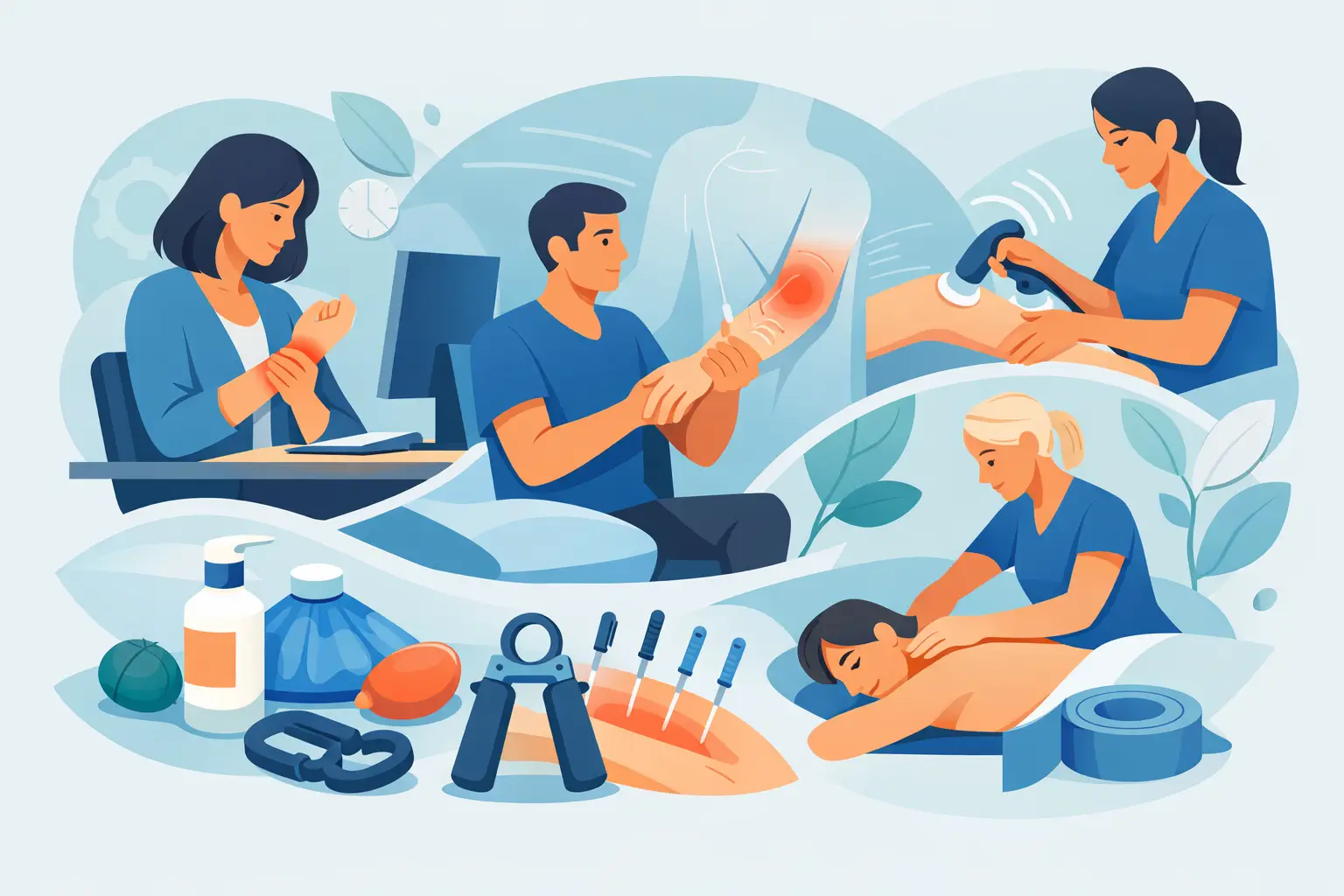
A sore wrist after a long workday can seem minor until gripping a coffee mug, typing an email, or lifting a grocery bag starts to hurt. That is often how repetitive strain injuries begin – quietly, gradually, and easy to dismiss until they interfere with daily life. When people start looking for the top therapies for repetitive strain injury, they are usually not just asking what reduces pain fastest. They want to know what will actually help them recover and keep the problem from coming back.
Repetitive strain injury, or RSI, is an umbrella term for overuse problems that affect muscles, tendons, nerves, and surrounding soft tissue. It often shows up in the wrist, hand, elbow, shoulder, neck, or forearm, especially in people who spend hours at a desk, use tools, perform repetitive lifting, or train regularly in sports. The tricky part is that RSI is rarely caused by one thing alone. Posture, workload, movement patterns, recovery time, joint mechanics, and tissue irritation can all play a role. That is why the best treatment is often not a single therapy, but a coordinated plan.
What makes repetitive strain injuries hard to treat
RSI tends to build over time. You may not remember one exact moment when the injury started, which makes it tempting to push through symptoms. Unfortunately, that often keeps the irritated tissue under constant load.
Another challenge is that the painful area is not always the only problem. Wrist pain may be influenced by tight forearm muscles, poor shoulder mechanics, or a workstation setup that keeps the neck and upper back under strain. If treatment focuses only on the sore spot, relief may be short-lived.
Top therapies for repetitive strain injury that actually help
The most effective care usually combines pain relief with improved mobility, tissue healing, and changes in how the body handles stress. Here are the therapies that tend to make the biggest difference.
Chiropractic care for joint mechanics and movement
When repetitive strain affects the wrist, elbow, shoulder, or neck, joint motion often changes. Some joints become stiff while others compensate. Chiropractic care can help restore healthier movement patterns through targeted manual treatment.
This matters because abnormal joint mechanics can keep nearby muscles and tendons under extra tension. For example, someone with forearm pain from computer work may also have restricted movement in the neck, shoulder, or upper back that increases strain through the arm. Improving mobility in those areas can reduce the load on irritated tissue.
Chiropractic care is not a stand-alone fix for every RSI case, but it can be an important part of a broader recovery plan when stiffness, postural stress, or movement dysfunction are involved.
Registered massage therapy for muscle tension and tissue overload
Massage therapy is often one of the most helpful options when RSI includes muscle tightness, trigger points, and guarding. Overworked tissue in the forearms, shoulders, neck, and upper back can become dense, tender, and less tolerant of daily activity.
Hands-on soft tissue treatment may help reduce that tension, improve circulation, and make movement more comfortable. It can also help patients who have been unconsciously bracing because of pain. That said, massage is usually most effective when paired with corrective exercises and load management. If a person returns to the same aggravating pattern without any other changes, tightness usually returns.
Acupuncture for pain relief and muscle regulation
Acupuncture can be a strong option for repetitive strain injuries, especially when pain has become persistent or when muscle tension is part of the picture. Many patients find it helps calm irritated tissue, reduce sensitivity, and relax overactive muscles.
It may be particularly useful for conditions such as tennis elbow, wrist strain, shoulder tension, and neck-related arm discomfort. Acupuncture is also appealing for people who want a drug-free approach to pain relief. Results can vary from person to person, but in the right case it can help create a window where movement and rehabilitation become easier.
Shockwave therapy for stubborn tendon pain
When RSI involves chronic tendon irritation, shockwave therapy may be worth considering. It is often used for longer-standing cases where tendon healing has stalled, such as tennis elbow or other overuse tendon problems.
Shockwave therapy delivers mechanical pulses to the affected tissue to stimulate a healing response. It is not the first step for every repetitive strain injury, and some cases respond better than others. Still, for chronic tendon issues that have not improved with rest alone, it can be a valuable addition to treatment.
Patients should know there can be some temporary soreness after treatment, so it is best used within a plan that also addresses workload, mobility, and strengthening.
Cold laser therapy for irritated soft tissue
Cold laser therapy is another non-invasive option that may support tissue healing and reduce inflammation in some RSI cases. It is commonly used for tendon, ligament, and soft tissue irritation.
This therapy is generally comfortable and quick, which makes it easy to combine with other treatments. On its own, it is unlikely to correct the underlying mechanics that caused the problem. As part of a broader plan, though, it may help settle symptoms enough for patients to tolerate rehab and normal activity more comfortably.
Corrective exercise and rehab for lasting results
If there is one therapy that should almost always be part of RSI care, it is exercise-based rehabilitation. Pain relief matters, but long-term improvement usually depends on better tissue capacity, improved posture, and more efficient movement.
That may include strengthening the forearm, shoulder, upper back, and core, improving wrist or shoulder mobility, and retraining how certain tasks are performed. In desk workers, that can mean postural endurance and ergonomic changes. In active adults and athletes, it may involve grip mechanics, training load, and recovery habits.
Exercise needs to be specific. Too much too soon can flare symptoms. Too little challenge may not create meaningful change. The right plan builds tolerance gradually so the body can handle work, sport, and daily demands with less irritation.
Why combined care often works better than one therapy alone
Many patients want to know which single treatment is best. The honest answer is that it depends on what is driving the injury. A person with mild muscle overuse may respond quickly to massage and exercise. Someone with chronic tendon pain and poor shoulder mechanics may need a combination of shockwave therapy, chiropractic care, and rehab. Another patient may need acupuncture to calm pain enough to begin moving normally again.
This is where integrated care can make a real difference. Instead of treating repetitive strain as a one-size-fits-all problem, a multidisciplinary approach looks at the full picture: the painful tissue, the joints above and below it, the daily activities that keep aggravating it, and the strategies that will prevent recurrence. At Pulse Health, that kind of coordinated care is designed to help patients move from temporary relief toward more durable results.
When to seek treatment for repetitive strain injury
A lot of people wait too long. They assume the pain will pass once work slows down or they take a weekend off. Sometimes it does. Often it returns as soon as normal activity picks back up.
If pain has lasted more than a couple of weeks, keeps returning, causes weakness, affects grip, leads to tingling or numbness, or starts limiting work and exercise, it is worth getting assessed. Early treatment is usually simpler than treating a more established problem.
What to expect from a good treatment plan
A strong RSI treatment plan should start with a thorough assessment, not a rushed guess. That means looking at symptom behavior, range of motion, strength, posture, work demands, training habits, and the joints and tissues connected to the painful area.
From there, treatment should be individualized. Some patients need symptom relief first. Others are ready to start strengthening right away. Good care should also include practical advice on activity modification. Rest can help in the short term, but complete rest is rarely the full answer. The goal is usually to reduce aggravation without letting the area become weaker and less tolerant.
Progress should be measurable. You should notice changes in pain, function, mobility, or tolerance for everyday tasks. If treatment only gives brief relief and nothing is changing in the bigger picture, the plan may need to be adjusted.
The right therapy is the one that matches your injury, your body, and the demands of your life. For repetitive strain injuries, that usually means looking beyond the sore spot and treating the patterns that caused it. When care is personalized, evidence-based, and focused on both recovery and prevention, getting back to work, workouts, and normal daily movement feels much more realistic.