
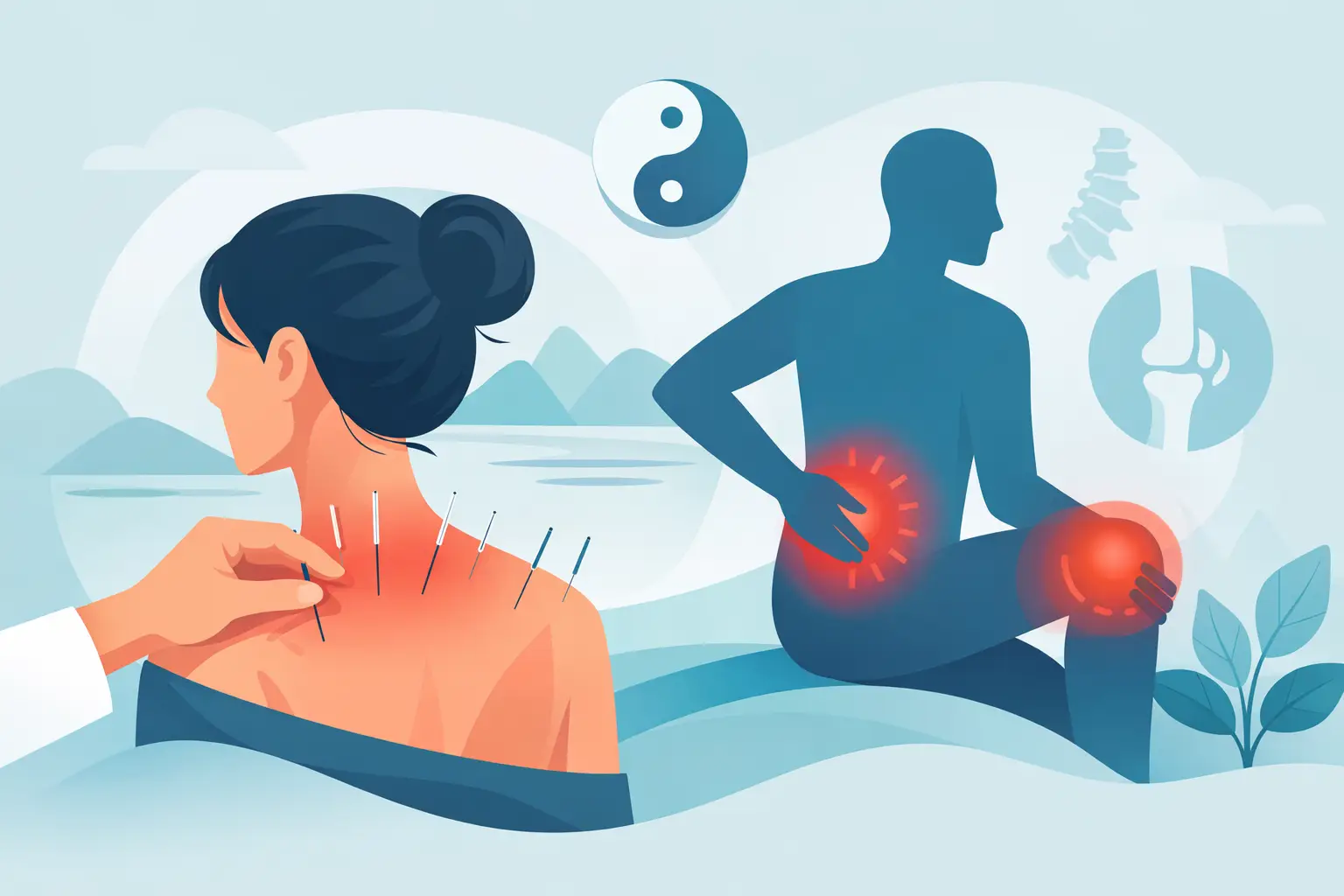
When pain has been present for months or years, another temporary fix can feel discouraging. So, does acupuncture help chronic pain? For many people, it can reduce pain intensity, improve movement, and make daily activities more manageable – particularly when it is part of a personalized care plan rather than the only treatment being used.
Acupuncture is not a promise of instant or permanent relief, and results vary by condition, overall health, stress levels, sleep, activity demands, and the cause of the pain. But it is a drug-free option with a growing body of research behind it for several common chronic pain concerns.
Does Acupuncture Help Chronic Pain According to Research?
Research suggests acupuncture may provide meaningful relief for certain types of chronic musculoskeletal pain, including low back pain, neck pain, knee osteoarthritis, shoulder pain, and some headache disorders. In many studies, people receiving acupuncture report less pain and better physical function than those receiving no treatment or usual care alone.
The evidence is not equally strong for every condition. Chronic pain is not one diagnosis. Pain from knee arthritis, for example, may respond differently than pain driven by a disc injury, nerve irritation, old surgery, repetitive work demands, or widespread sensitivity in the nervous system. A thorough assessment matters because the right treatment plan depends on what is contributing to your symptoms.
Acupuncture may be especially helpful when pain has led to a difficult cycle: you hurt, so you move less; you become stiff or weak; then ordinary movement hurts more. By lowering symptoms enough to help you return to walking, strengthening, work tasks, or recreational activity, acupuncture can support progress that is harder to achieve when pain is constantly in the foreground.
It should not be viewed as a replacement for medical evaluation when there are warning signs such as unexplained weight loss, fever, significant weakness, loss of bladder or bowel control, severe trauma, or rapidly worsening symptoms. Those situations need prompt medical attention.
How Acupuncture May Reduce Pain
Traditional acupuncture is based on the placement of very fine, sterile needles at specific points on the body. From a modern clinical perspective, needling may influence pain through several pathways. It can stimulate nerves and local tissues, affect how the brain and spinal cord process pain signals, and encourage the release of the body’s own pain-modulating chemicals.
This matters because chronic pain is often more complex than tissue damage alone. An injury may heal, while the nervous system remains highly protective and continues sending strong pain signals. Poor sleep, stress, fear of movement, and repeated aggravation can all amplify that sensitivity. Acupuncture may help calm this response for some patients, creating a window for more comfortable movement and recovery.
It can also be used locally around painful muscles, tendons, or joints, or at points farther from the painful area. A practitioner may choose treatment points based on your symptoms, examination findings, movement limitations, and how your body responds from visit to visit.
Conditions That May Respond Well
People often seek acupuncture for persistent low back pain, neck tension, knee pain, hip discomfort, headaches, and pain related to overuse or repetitive strain. It may also be considered for muscle tightness that develops after an injury or when pain is interfering with sleep and activity.
For an active adult with stubborn Achilles or shoulder discomfort, acupuncture may help reduce sensitivity while a clinician addresses strength, loading tolerance, and movement mechanics. For someone sitting at a desk with chronic neck and upper-back pain, it may provide relief while care also focuses on posture habits, mobility, ergonomics, and muscle endurance.
That distinction is important. If a tendon is being overloaded every day, or a joint lacks the strength and control needed for a job or sport, needles alone will not change the underlying demand. The strongest plans pair symptom relief with practical steps that improve how the body moves and tolerates activity.
What a Treatment Plan Can Look Like
Your first appointment should begin with a conversation, not just a treatment table. A qualified practitioner should ask where the pain is, how long it has been present, what makes it better or worse, what treatments you have tried, and how symptoms affect work, sleep, exercise, and daily life. They should also screen for relevant medical history and refer you when acupuncture is not appropriate.
During treatment, most people feel minimal discomfort as needles are inserted. You may notice a brief pinch, warmth, heaviness, tingling, or a dull ache around a point. Once the needles are in place, many patients rest for about 15 to 30 minutes. Treatments are commonly combined with hands-on therapy, mobility work, rehabilitation exercises, or other therapies when clinically appropriate.
There is no universal number of sessions. Some people notice a shift after one or two visits, while longstanding pain often needs a trial of several treatments to assess whether it is helping. Your provider should set measurable goals with you, such as walking farther, sleeping more comfortably, turning your head with less restriction, returning to the gym, or reducing flare-ups at work.
If there is little or no progress after a reasonable trial, the plan should be reassessed. That may mean changing the approach, focusing more on exercise-based care, seeking imaging or medical input, or considering another diagnosis. Good care is responsive, not repetitive.
Acupuncture Works Best as Part of Integrated Care
Chronic pain usually benefits from more than one tool. Depending on your needs, a coordinated plan may include chiropractic care, massage therapy, targeted rehabilitation, mobility training, ergonomic changes, activity modification, sleep support, and education about pacing. The goal is not simply to chase a lower pain score. It is to help you do more of what matters with greater confidence and fewer setbacks.
For example, someone recovering from a work-related back injury may benefit from acupuncture to settle acute muscle guarding, then progress through gentle movement and strength work to rebuild capacity for lifting. A runner with recurring knee pain may use acupuncture for short-term symptom relief while addressing training volume, hip strength, footwear, and running mechanics.
This whole-person approach also avoids an all-or-nothing mindset. You do not have to wait until pain is gone to begin rebuilding function. Small, well-tolerated improvements in movement can gradually change what your body can handle.
Safety, Side Effects, and When to Be Cautious
When performed by a properly trained professional using single-use sterile needles, acupuncture is generally considered safe. The most common side effects are mild and temporary: small bruises, minor bleeding at the needle site, temporary soreness, lightheadedness, or fatigue after treatment.
Tell your practitioner if you take blood-thinning medication, have a bleeding disorder, are pregnant, have a pacemaker or implanted electrical device, have an infection or skin condition near the treatment area, or tend to faint with needles. These factors do not always rule out acupuncture, but they may change how treatment is performed.
A reputable provider will explain expected benefits and limits, obtain your consent, and make space for questions. You should never feel pressured to continue a treatment that does not feel right for you.
How to Decide Whether It Is Worth Trying
Acupuncture may be worth considering if chronic pain is limiting your movement, sleep, work, or enjoyment of daily life and you want a non-drug option to include in your care. It may be particularly useful when you are ready to combine pain relief with active recovery instead of relying on passive treatment alone.
Before booking, ask whether the practitioner has experience with your condition, how they measure progress, what they recommend alongside acupuncture, and when they would refer you to another provider. If you are using insurance, confirm coverage requirements directly with your plan, since benefits and practitioner eligibility can differ.
The best next step is not to search for a single treatment that fixes everything. It is to find a care plan that listens to the full story of your pain, gives you realistic options, and helps you move toward the life you want to return to.