
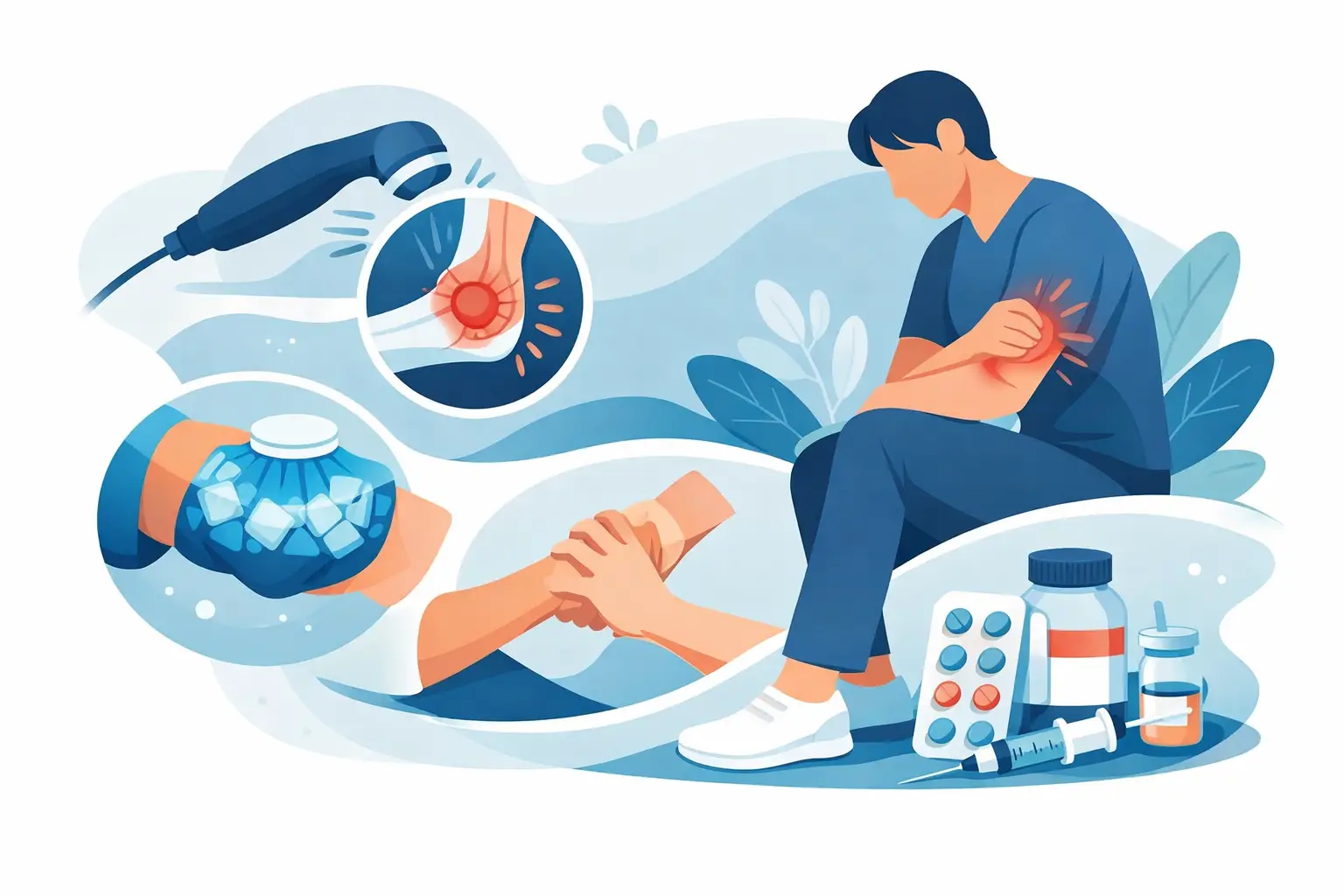
That sharp pull in your elbow when you lift a bag, the ache in your heel during your first few morning steps, or the burning pain in your shoulder when you reach overhead often points to the same problem – an irritated tendon. When people look for the top treatments for tendonitis, they usually want one thing: relief that lasts longer than a few days.
Tendonitis happens when a tendon becomes irritated, overloaded, or inflamed. It can develop after sports, repetitive work, poor movement mechanics, or even a sudden increase in activity. The frustrating part is that tendon pain rarely improves with a single quick fix. The best results usually come from matching the treatment to the cause, the severity, and the tendon involved.
What makes the top treatments for tendonitis effective?
The most effective care does two jobs at once. It settles pain in the short term and improves how the tendon handles load in the long term. If treatment only chases symptoms, pain often returns as soon as you go back to work, the gym, or your normal routine.
That is why tendonitis treatment tends to work best when it is layered. A person with Achilles tendon pain may need activity modification, hands-on therapy, and progressive strengthening. Someone with tennis elbow may need changes to grip mechanics, soft tissue treatment, and a plan to reduce strain at work. The right answer depends on the tendon, your daily demands, and how long the issue has been there.
Rest helps, but not the way most people think
Many patients assume complete rest is the top answer. In the very early stage, reducing aggravating activity can absolutely help calm an irritated tendon. If every squat flares your patellar tendon or every overhead reach aggravates your shoulder, it makes sense to temporarily scale back.
But total rest for too long can create a different problem. Tendons need gradual loading to recover well. If you stop using the area completely for weeks, the tissue may become less tolerant to normal movement. That is why most tendon recovery plans focus on relative rest, not bed rest. You reduce the activities that spike pain, then reintroduce movement in a controlled way.
Progressive exercise is often the foundation
If there is one treatment that consistently shows up among the top treatments for tendonitis, it is targeted exercise. Tendons respond to the right kind of loading. Strengthening helps improve tissue tolerance, reduces strain during daily activity, and lowers the chance of repeated flare-ups.
This does not mean random stretching videos or pushing through sharp pain at the gym. A good rehab program is specific. It may begin with isometric exercises to reduce pain, then move into slow strength work, balance training, or sport-specific drills. For rotator cuff tendonitis, that might include shoulder stabilization. For Achilles tendonitis, calf loading is often central. For elbow tendon pain, wrist and forearm strengthening usually matter more than people expect.
Progression is the key. Too little load may not stimulate change. Too much load too soon can keep the tendon irritated. This is one reason guided care can make a real difference.
Manual therapy can reduce pain and improve movement
Hands-on treatment is not a cure by itself, but it can be very useful as part of a broader plan. Massage therapy, soft tissue work, and joint-based treatment may help reduce muscular tension around the irritated tendon, improve mobility, and make exercise easier to tolerate.
For example, tendon pain in the shoulder is often influenced by stiffness through the upper back, neck, or shoulder joint. Elbow tendonitis may be aggravated by tight forearm muscles and repetitive gripping patterns. When surrounding tissues are restricted, the tendon may end up handling more stress than it should.
This is where a coordinated approach can help. Chiropractic care, registered massage therapy, and mobility-focused treatment can support better movement mechanics while rehab exercises address the underlying capacity of the tendon.
Shockwave therapy is a strong option for stubborn cases
When tendon pain has been lingering for weeks or months, shockwave therapy is often one of the more effective non-surgical options to consider. It is commonly used for chronic tendon problems such as plantar heel pain, Achilles tendon pain, tennis elbow, and some shoulder conditions.
Shockwave works by delivering acoustic energy into the affected tissue. The goal is to stimulate healing, improve circulation, and support tissue repair. It is not always comfortable during treatment, and it is not the first step for every case, but for persistent tendon issues it can be a very useful part of care.
It also comes with an important trade-off. Shockwave tends to work best when combined with rehab, not instead of rehab. Patients sometimes hope for a passive treatment that solves everything on its own. In reality, the best outcomes usually happen when advanced therapies are paired with a loading program and activity guidance.
Acupuncture and dry needling may help calm pain
Needle-based treatments can be helpful for some tendon conditions, especially when pain is limiting movement or sleep. Acupuncture may support pain relief and relaxation, while dry needling is often used to release tight muscles that are contributing to abnormal stress on the tendon.
This can be especially useful when tendonitis is not just a tendon problem. A painful shoulder may also involve muscle guarding through the upper trap and rotator cuff. A painful knee may involve overloaded quads or calf muscles. Addressing those surrounding tissues can reduce tension and improve how the area functions.
That said, needle-based care is usually supportive rather than standalone. It can help open a window for better movement, but the long-term fix still comes back to correcting load, mobility, and strength.
Cold laser therapy may support healing in some cases
Cold laser therapy is another non-invasive option often used for soft tissue irritation. It is designed to support cellular repair, reduce inflammation, and help with pain control. Some patients respond very well to it, especially in earlier or moderately irritated cases.
The main benefit is that it is gentle and easy to combine with other therapies. The limitation is that response varies. Some tendon problems improve noticeably, while others need a stronger emphasis on exercise-based rehab or more mechanical intervention. Like many tools, it is most useful when chosen for the right patient at the right stage of recovery.
Bracing, taping, and orthotics can reduce strain
Some tendon issues improve when you reduce stress on the tissue during daily life. A counterforce brace may help with tennis elbow. Supportive taping may help certain shoulder, knee, or foot conditions. Custom orthotics can be valuable when poor foot mechanics are contributing to ongoing strain through the Achilles tendon, plantar fascia, knees, or hips.
These options are not meant to replace recovery work. They are there to create a better environment for healing. If walking mechanics, standing posture, or repetitive loading patterns are part of the problem, support strategies can make treatment more effective and day-to-day pain more manageable.
Anti-inflammatory medication has limits
Over-the-counter medication can sometimes reduce pain enough to help you function. In the short term, that may be useful. But medication does not correct why the tendon became irritated in the first place.
There is also a nuance here that matters. Not all tendon pain is driven by active inflammation, especially if it has become chronic. Many long-standing tendon problems are more about tissue degeneration, poor load tolerance, and repeated strain. That means medication alone is rarely one of the top treatments for tendonitis if the goal is lasting improvement.
The best treatment plan usually combines several approaches
In practice, tendonitis often responds best to a personalized mix of therapies rather than a single method. Someone with new-onset wrist tendonitis from repetitive office work may improve with activity modification, soft tissue therapy, and a simple home program. A runner with chronic Achilles pain may need shockwave therapy, calf strengthening, gait assessment, and footwear support. A senior with shoulder tendon pain may need mobility work, gentle strengthening, and pain-relieving treatment that makes daily tasks easier.
This is where an integrated clinic model becomes valuable. At Pulse Health, patients often do better when care is coordinated across services instead of pieced together one appointment at a time. That can mean combining chiropractic care, massage therapy, acupuncture, shockwave, or laser therapy based on how the tendon is behaving and what your daily life demands from that area.
When to get professional help
If tendon pain is lasting more than a couple of weeks, getting worse, limiting work or exercise, or returning every time you become active again, it is worth having it assessed. The same is true if there is significant weakness, swelling, reduced range of motion, or pain that is changing how you move.
A thorough evaluation matters because not every case of tendon pain is simple tendonitis. Sometimes bursitis, joint irritation, nerve involvement, or a partial tear can mimic it. The treatment plan needs to match the actual problem.
The good news is that most tendon issues improve well with conservative care when they are addressed early and managed properly. The goal is not just to calm pain, but to help you move with confidence again, without feeling like every workout, work shift, or weekend activity will set you back.