
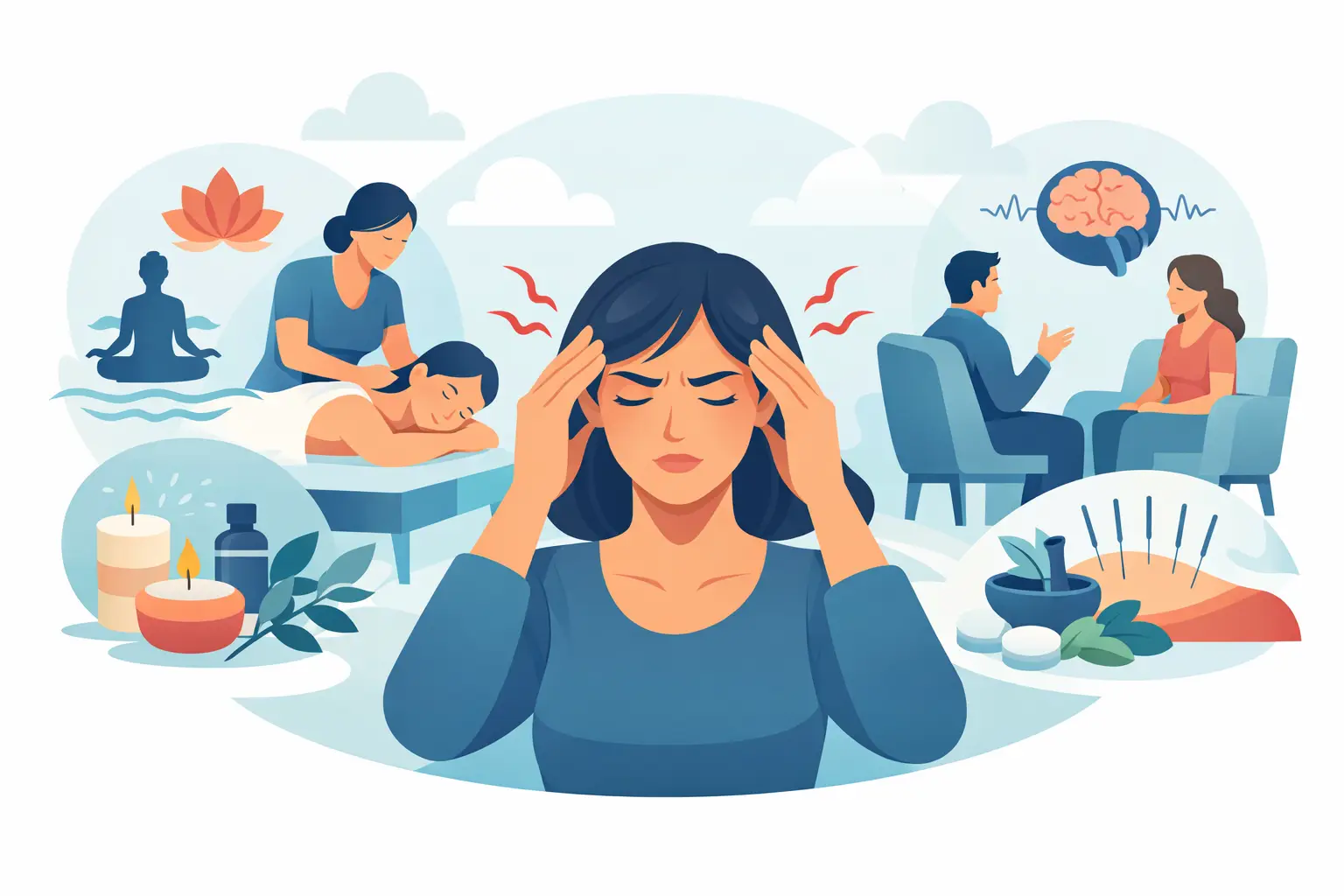
That band-like pressure across your forehead or the ache creeping up from your neck at 3 p.m. is more than an annoyance. When people search for the best therapies for tension headaches, they are usually not looking for another temporary fix. They want relief that lasts, and they want to understand why the headaches keep coming back.
Tension headaches are one of the most common types of headaches, and they are often tied to muscle tension, posture, stress, jaw clenching, and repetitive strain. For many adults, especially those working at desks, training hard, driving often, or recovering from injury, the headache is only the visible part of a bigger musculoskeletal problem. That is why the most effective care usually does not rely on one treatment alone. It looks at the head, neck, shoulders, spine, habits, and stress load together.
What causes tension headaches in the first place?
Tension headaches typically feel like dull, steady pressure rather than throbbing pain. Some people describe them as a tight band around the head. Others feel soreness at the base of the skull, behind the eyes, or through the upper traps and shoulders.
The trigger is not always just stress. In many cases, the issue is a combination of muscle overload, poor workstation setup, forward head posture, reduced neck mobility, jaw tension, sleep disruption, dehydration, or long hours without movement. A past injury can also matter. If your neck mechanics changed after a car accident, sports injury, or repetitive workplace strain, your headaches may be a symptom of that larger pattern.
This is where treatment choice matters. The best approach depends on what is driving the tension. A headache caused mostly by tight upper trapezius muscles may respond differently than one linked to cervical joint restriction or TMJ tension.
Best therapies for tension headaches that address the root cause
Massage therapy for muscle-driven tension
Registered massage therapy is often one of the most helpful starting points for tension headaches, especially when the pain is linked to tight muscles in the neck, shoulders, and upper back. Treatment can reduce tone in overworked muscles, improve circulation, and ease the trigger points that commonly refer pain into the head.
Massage can be especially useful for people who spend long hours at a desk, carry stress in their shoulders, or wake up with neck stiffness. It may also help when headaches are paired with jaw tension or poor sleep. The trade-off is that massage alone may not hold results if the underlying issue includes joint restriction, weak postural muscles, or a workstation setup that keeps recreating the same strain.
Chiropractic care for neck and spinal mechanics
When tension headaches are related to restricted movement in the cervical spine or upper back, chiropractic care may be an important part of treatment. A clinical assessment can help determine whether reduced joint mobility, posture, or movement dysfunction is contributing to recurring pain.
Chiropractic treatment often focuses on improving motion in the neck and thoracic spine, reducing mechanical stress, and helping the body move more efficiently. For some patients, this leads to fewer headaches and less tightness through the shoulders and base of the skull. It is not a one-size-fits-all option, though. If a person is highly acute, very sensitive, or dealing with multiple pain drivers, a gentler or more blended treatment plan may be a better fit.
Acupuncture for pain regulation and muscle tension
Acupuncture is another strong option when the goal is to calm pain, reduce muscular tension, and support the nervous system. Many patients find it helpful when headaches are frequent, stress-related, or paired with neck and shoulder tightness that does not fully resolve with stretching alone.
One advantage of acupuncture is that it can work well for people who want a drug-free treatment that feels less force-based. It may also pair well with other hands-on therapies. Results vary by person, and acupuncture tends to work best when it is part of a broader plan rather than the only strategy being used.
Corrective exercise and posture retraining
If headaches keep returning, exercise therapy is often what turns short-term relief into longer-term change. Tight muscles are only part of the picture. Weak deep neck flexors, reduced upper back strength, limited shoulder mobility, and poor movement habits can all keep feeding the same tension pattern.
A targeted exercise plan might include mobility work for the thoracic spine, postural strengthening, neck control exercises, and strategies to reduce strain during work or workouts. This is not glamorous care, but it is often the missing piece. The downside is that exercise requires consistency. It usually helps most when guided by a practitioner who can identify the right deficits instead of handing out generic stretches.
Which therapies for tension headaches work best together?
For many patients, combination care is more effective than relying on one therapy in isolation. A person with desk-related tension headaches might benefit from massage to release tight muscles, chiropractic care to improve neck and upper back mobility, and exercise therapy to build better support and posture. Someone whose symptoms spike with stress may respond well to acupuncture plus soft tissue treatment and recovery strategies.
This integrated model matters because tension headaches rarely come from a single source. If treatment only chases pain in the moment, relief may be brief. If treatment addresses mobility, muscle tension, movement habits, and daily load together, results are often more durable.
That is one reason many patients prefer a multidisciplinary setting like Pulse Health. When providers can coordinate care under one roof, it becomes easier to match the treatment plan to the person instead of forcing every patient into the same approach.
Other therapies that may help in the right case
Some adjunctive therapies can also support headache care, depending on the presentation. Cupping or Gua Sha may help reduce soft tissue restriction in the upper back and shoulders. Cold laser therapy may be considered when irritation and inflammation are part of the pain picture. If foot mechanics and standing posture are contributing to full-body strain, custom orthotics can occasionally play a supporting role, though they are rarely the first answer for headache treatment.
These therapies are usually most helpful when they are chosen for a clear reason. More treatment is not always better. Better-targeted treatment is what matters.
When to seek care instead of waiting it out
Occasional mild tension headaches can happen to almost anyone. But if your headaches are becoming frequent, lasting longer, interfering with work, sleep, exercise, or concentration, it is worth getting assessed. The same is true if you notice recurring neck stiffness, jaw pain, shoulder tension, or headaches that keep returning after temporary relief.
A proper evaluation helps rule out whether the problem is primarily muscular, joint-related, postural, stress-driven, or connected to a past injury. It also helps determine when a tension headache may not be a tension headache at all.
Seek immediate medical attention if a headache is sudden and severe, follows head trauma, comes with fever, weakness, numbness, confusion, vision changes, or feels clearly different from your usual pattern. Conservative care has an important role, but red flags should never be ignored.
How to choose the best therapy for your headache pattern
The best therapies for tension headaches depend on what your body is telling you. If your headache builds with neck and shoulder tightness, soft tissue treatment may be the right starting point. If turning your head feels restricted or your posture has changed since an injury, a mechanical assessment may point toward chiropractic care or mobility-focused treatment. If stress is a major trigger, acupuncture and recovery strategies may deserve a larger role.
The key is personalization. Effective care should not just ask where your head hurts. It should ask when it starts, what makes it worse, what your workday looks like, how you sleep, how you move, and what your neck and shoulders are doing all day long.
Lasting improvement usually comes from treating the pattern, not just the pain. When headaches are approached that way, relief tends to feel less like a short break and more like getting your normal life back.