
If your first steps out of bed feel like you are landing on a tack, you are not imagining it. Heel pain can be stubborn, disruptive, and surprisingly hard to calm down once it starts interfering with walking, exercise, and long days on your feet. This shockwave therapy review for heel pain looks at what the treatment actually does, who tends to benefit, and where it fits in a broader recovery plan.
For many adults, persistent heel pain comes down to irritation in the plantar fascia, the thick band of tissue along the bottom of the foot, or strain where soft tissue attaches near the heel. Sometimes the pain is tied to training load, long hours standing at work, reduced ankle mobility, poor footwear support, or changes in gait after another injury. That matters, because the right treatment is not just about quieting pain for a week. It should help address why the heel became overloaded in the first place.
What shockwave therapy is really meant to do
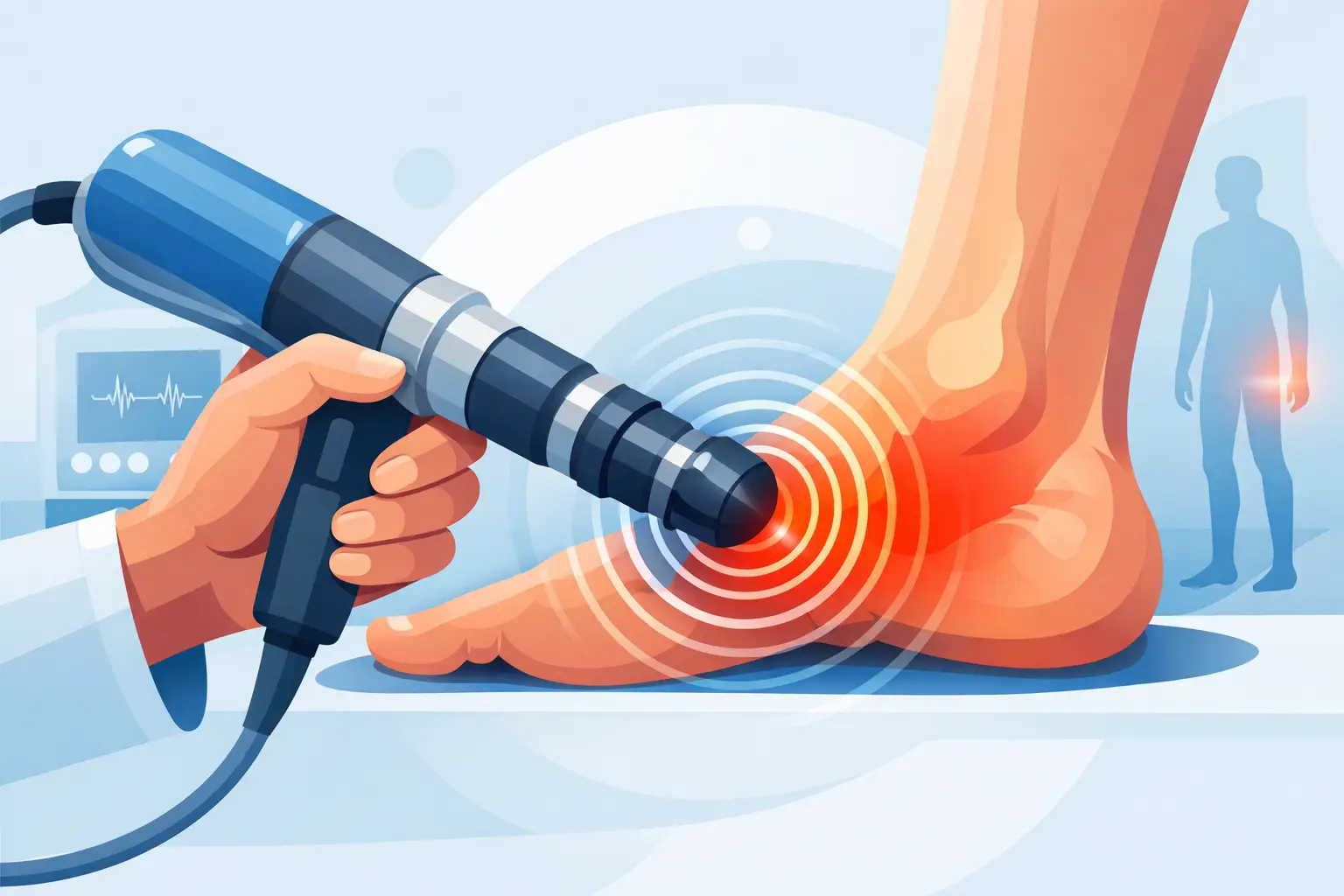
Shockwave therapy uses acoustic waves to stimulate tissue that has become irritated, overloaded, or slow to heal. In heel pain cases, it is most often used for plantar fasciitis, plantar fasciopathy, or chronic tenderness around the heel insertion. The goal is not to numb the area. The goal is to encourage a healing response in tissue that has stalled.
That distinction is important. If you have had heel pain for months and stretching, rest, ice, or footwear changes have only helped a little, shockwave therapy may be considered because it targets tissue repair rather than short-term symptom masking. It is a non-surgical option, and for many patients that is a meaningful advantage.
The treatment itself is usually brief. A clinician applies gel to the area and uses a handheld device to deliver pulses to the painful region. The intensity can be adjusted based on sensitivity and treatment goals. Most people describe it as uncomfortable but tolerable. It is not usually a relaxing treatment, but it is also not meant to keep you out of your normal routine for days afterward.
Shockwave therapy review for heel pain – what the evidence suggests
A fair shockwave therapy review for heel pain has to start with this: results are often strongest in chronic cases, not brand-new pain. If your heel started hurting last week after an unusual workout or a long travel day, conservative care may be the first step. But if the problem has stayed around for months, especially when the pain is sharp in the morning or after periods of rest, shockwave therapy has a stronger case.
Clinical research has shown promising results for chronic plantar heel pain, particularly when other conservative approaches have not been enough. Many patients report reduced pain and better walking tolerance over a series of sessions. That said, it is not an instant fix. Improvement tends to build gradually over several weeks as the tissue response develops.
This is where expectations matter. Some patients feel a change early, sometimes after one or two visits. Others notice only mild improvement at first and stronger progress later in the treatment course. A person with long-standing tissue irritation, poor calf mobility, and unsupportive footwear may need a more layered plan than shockwave alone.
In practice, the best outcomes usually come when treatment is paired with a proper assessment. If the heel is painful because of plantar fascia overload, the ankle is stiff, the calves are tight, and the foot mechanics are not being supported, then each of those factors may need attention. That is why integrated care tends to matter more than any single tool.
What treatment feels like and how many sessions are typical
Patients often want to know the most practical part first: what will this feel like, and how long will it take? During treatment, the pulses are directed into the painful tissue and surrounding area. Sensitive spots can feel sharp or intense for short bursts, especially if the area has been irritated for a long time. The sensation usually settles as the session continues.
A typical plan often includes several sessions spaced over a few weeks. Exact timing depends on the severity and duration of symptoms, activity level, and how the tissue responds. Most providers do not present shockwave therapy as a one-visit cure, because that would set the wrong expectation.
After a session, some soreness is normal. Many patients return to regular daily activity right away, though high-impact exercise may need to be modified temporarily depending on the case. Good providers will usually give clear guidance about what to keep doing, what to reduce, and how to support recovery between visits.
Who is most likely to benefit
Shockwave therapy can be a strong option for adults with heel pain that has become persistent and frustrating. That includes runners, active adults, people who stand all day at work, and anyone whose pain returns each time they try to increase walking or exercise again. It may also appeal to patients looking for a non-drug, non-surgical option before considering more invasive care.
It is often most useful when heel pain has lasted longer than expected and basic measures have not fully solved it. If you have already tried changing shoes, stretching, resting, and using a ball or roller under the foot, but the pain keeps returning, that is often when a more targeted approach becomes worth considering.
Still, it is not for every case. If heel pain is actually coming from a nerve issue, a stress injury, inflammatory condition, or another diagnosis altogether, then the treatment plan may need to change. Accurate assessment comes first. Heel pain is common, but it is not always simple.
The trade-offs patients should know about
A balanced shockwave therapy review for heel pain should include the limitations, not just the benefits. The first limitation is that it can be uncomfortable during treatment. The second is that improvement is usually gradual, not immediate. The third is that it works best when the diagnosis is right and the surrounding contributing factors are being managed.
Cost can also be part of the decision. Some patients want to know whether the investment is worth it compared with continuing home care alone. That depends on how long symptoms have lasted, how much the pain is affecting work or activity, and whether previous approaches have plateaued. For someone avoiding hikes, workouts, or long shifts because of ongoing heel pain, a treatment that helps break that cycle can be worthwhile.
There are also cases where shockwave should be used cautiously or not at all, depending on medical history, tissue status, or provider judgment. That is another reason a proper consultation matters more than simply booking a machine-based treatment without context.
Why combined care often works better than a single treatment
At a clinic that takes a whole-body view, shockwave therapy is rarely the entire plan. Heel pain may start at the foot, but the driver can include calf tightness, reduced ankle mobility, poor load management, hip weakness, repetitive impact, or footwear that does not support the way you move. If those issues stay in place, pain can return even if the heel temporarily calms down.
That is why combined care often makes more sense. Manual therapy, mobility work, strengthening, gait or movement assessment, and orthotic support may all have a role depending on the patient. Someone who spends eight hours on concrete floors has different needs than someone training for a half marathon. Someone recovering from a flare-up after months of inactivity needs a different progression than someone trying to maintain performance.
This patient-centered approach is where clinics like Pulse Health stand out. Instead of treating the heel in isolation, the goal is to understand the stress pattern behind it and build a treatment plan that supports both pain relief and long-term function.
Is shockwave therapy worth trying for heel pain?
For the right patient, yes. If heel pain has become chronic, stubborn, and limiting, shockwave therapy is one of the more credible non-surgical options available. It has a useful role, especially when standard home strategies have not gone far enough. The key is to see it as part of a plan, not as a magic reset button.
If your heel pain is recent, mild, or clearly tied to a short-term overload, simpler care may be enough. If it has been hanging on for months, affecting how you walk, exercise, or get through the day, it may be time for a more focused evaluation. The best next step is not guessing whether your heel pain matches someone else’s story online. It is getting the tissue, the mechanics, and the cause properly assessed so the treatment fits your case.
Heel pain has a way of shrinking your world one step at a time. The encouraging part is that with the right diagnosis and a thoughtful treatment strategy, it usually does not have to stay that way.