
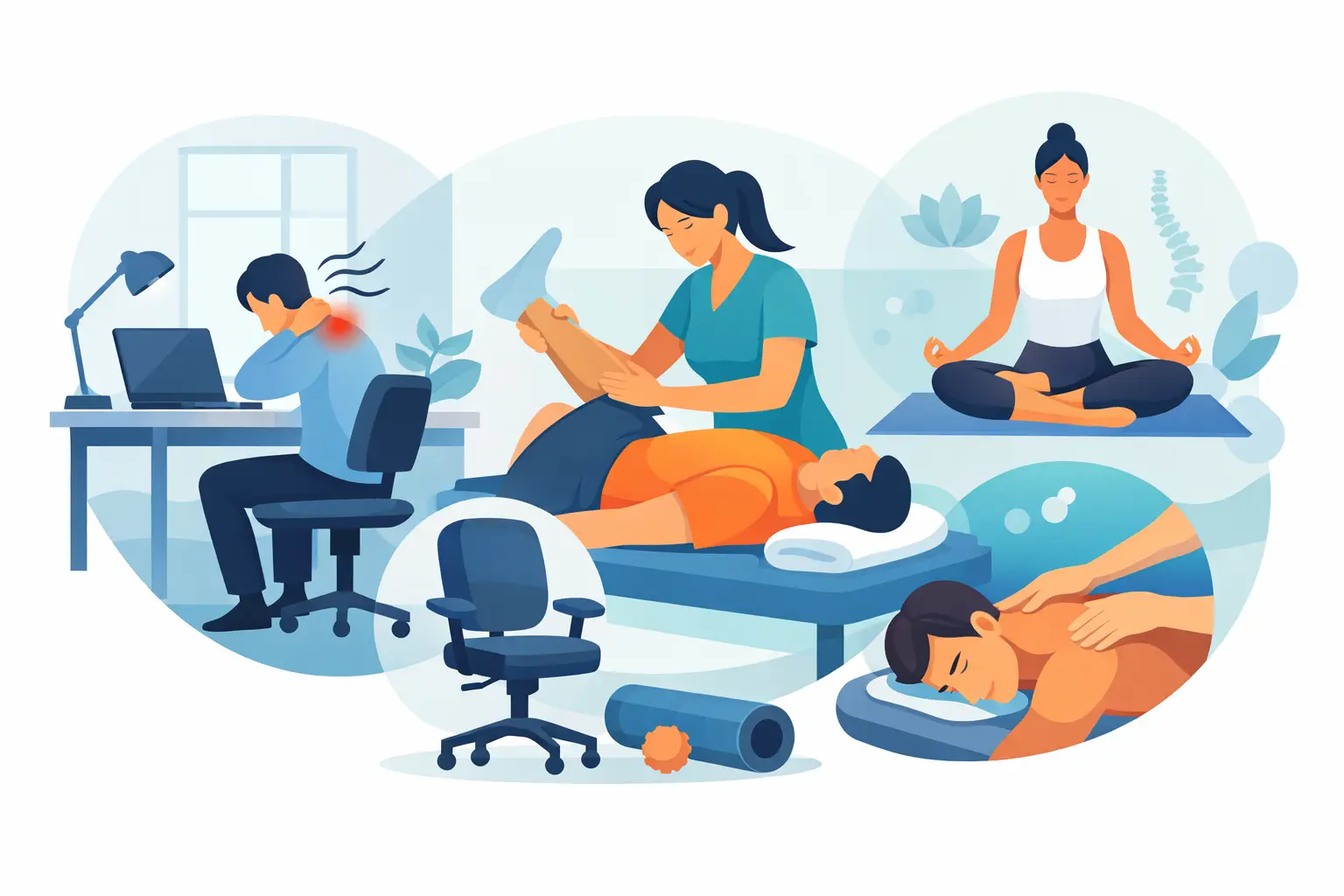
You usually do not notice desk pain when it starts. It shows up as a tight neck halfway through the afternoon, an ache between the shoulder blades on the drive home, or a low back that feels stiff every time you stand up. When people ask about the best therapies for desk pain, they are often really asking two things at once: what will calm this down now, and what will stop it from coming back next week?
That is where treatment choice matters. Desk pain is rarely caused by one dramatic injury. More often, it builds from long hours in one position, low-grade muscle tension, reduced joint movement, screen posture, stress, and work habits that keep the same tissues under load all day. The most effective care usually combines short-term pain relief with a plan to restore movement and reduce the strain that created the problem in the first place.
What desk pain actually includes
Desk pain is not a single diagnosis. For one person, it is neck stiffness with headaches. For another, it is shoulder tension, wrist discomfort, mid-back burning, or low back pain that gets worse after sitting. Some people also notice numbness, tingling, or pain that travels into the arm or leg, which can suggest nerve irritation and should be assessed more carefully.
The common thread is that desk work changes how the body loads over time. Hips stay flexed, upper backs round, shoulders drift forward, and the head often moves in front of the torso. Even a good chair cannot fully offset eight or more hours of limited movement. That is why a treatment that only masks symptoms may help for a few days but not for very long.
Best therapies for desk pain depend on the cause
There is no single winner for everyone. The best therapies for desk pain depend on where the pain is located, how long it has been present, whether there is nerve involvement, and how your body responds to different types of care. In practice, the strongest results often come from combining therapies rather than relying on one approach alone.
Chiropractic care for joint restriction and posture-related pain
If desk work has left your neck, upper back, or low back feeling locked up, chiropractic care can be useful. Gentle adjustments and joint mobilization are designed to improve motion in areas that have become stiff from prolonged sitting and repetitive positioning. When joints are not moving well, nearby muscles often tighten to compensate, which can add to the ache and fatigue people feel at the end of the day.
This type of treatment is often a good fit for neck pain, tension headaches, mid-back stiffness, and low back discomfort linked to sitting. It can provide noticeable relief relatively quickly, but the trade-off is that adjustments alone may not hold if muscle imbalance, workstation setup, and movement habits are not addressed at the same time.
Registered massage therapy for muscle tension and overload
Massage therapy is one of the most effective options when desk pain feels muscular rather than sharp or unstable. Tight upper traps, tender shoulder blades, a clenched jaw, and low back soreness often respond well to hands-on soft tissue work. Massage can reduce muscle guarding, improve circulation, and help people move more comfortably.
It is especially helpful when stress is part of the picture. Many office workers carry tension in the neck and shoulders without realizing how much it contributes to their pain. The limitation is that massage typically treats the soft tissue side of the problem best. If joint restriction, poor movement mechanics, or nerve irritation are driving symptoms, massage may need to be paired with other care.
Acupuncture for pain modulation and persistent tension
Acupuncture can be a strong option for desk-related pain that keeps returning, especially when there is a mix of muscle tension, stress, and sensitivity in the nervous system. Many patients find it helpful for neck pain, headaches, upper back tightness, and low back discomfort that has become stubborn.
From a practical standpoint, acupuncture may help calm irritated tissues and support the body’s pain-regulation systems. It is not a magic fix, and some people respond more strongly than others, but it can fit very well into a broader care plan when pain is lingering or when someone prefers a drug-free option.
Corrective exercise and mobility work for lasting results
This is the therapy category people tend to skip, even though it is often what keeps pain from returning. If your body spends most of the day in one position, you need the opposite pattern built back in. That usually means improving thoracic mobility, opening the front of the hips and chest, strengthening the upper back and core, and retraining posture in a realistic way.
The key word is realistic. Most people are not going to maintain perfect posture for eight straight hours, and they do not need to. They do need movement variety and enough strength and mobility to tolerate their workday better. Exercise-based care is slower than a passive treatment, but it often makes the biggest difference over time.
When combined care works better than a single therapy
A lot of desk pain is layered. You might have stiff spinal joints, overworked muscles, reduced shoulder mobility, and a workstation that encourages slouching. In that situation, choosing between chiropractic, massage, or acupuncture is less useful than building the right combination.
For example, someone with neck pain and tension headaches may respond well to chiropractic care for joint motion, massage therapy for muscle tightness, and simple home exercises to improve posture endurance. A person with chronic low back pain from prolonged sitting may benefit from manual therapy, hip mobility work, and core strengthening, with ergonomic changes to reduce repeated strain.
This is one reason integrated clinics tend to be helpful for office-related pain. When practitioners coordinate care instead of working in isolation, treatment can be adjusted based on how the body is actually responding. At Pulse Health, that team-based model allows patients to access multiple evidence-based therapies under one roof, which can make care more efficient and more personalized.
Other therapies that may help in specific cases
Some desk pain cases need more than the usual starting options. If soft tissue irritation is chronic, adjunctive treatments such as cupping or Gua Sha may help reduce tension and improve tissue mobility for certain patients. If pain has a longer recovery timeline or there is stubborn tendon-related irritation, shockwave therapy or cold laser therapy may be considered depending on the diagnosis.
Custom orthotics can also matter more than people expect. If foot mechanics and standing posture are contributing to low back, hip, or knee strain throughout the day, better support from the ground up can reduce cumulative stress. This is not relevant for every desk worker, but for some people, it is an important missing piece.
How to know which therapy is right for you
Start with the pattern of your symptoms. If pain is mostly stiffness and reduced range of motion, chiropractic care may be the best first step. If the main problem is muscle tightness, soreness, and stress-related tension, massage therapy often makes sense. If symptoms are persistent, sensitive, or tied to headaches and chronic tension, acupuncture may be worth considering. If the pain improves temporarily but keeps coming back, corrective exercise and movement retraining usually need to be part of the plan.
Red flags change the picture. If you have significant numbness, weakness, shooting pain, unexplained symptoms, or pain following a workplace or motor vehicle injury, a proper assessment matters before selecting treatment. Good care should match the diagnosis, not just the symptom location.
What good treatment should include
The best therapies for desk pain should not feel random. A good treatment plan starts with an assessment of posture, movement, joint function, muscle tension, and daily work demands. It should explain why you hurt, what the likely drivers are, and what will be done to improve both symptoms and function.
It should also include practical advice you can actually use. Sometimes that means changing monitor height or keyboard position. Sometimes it means taking two-minute movement breaks every hour instead of waiting until your body is already flared up. Sometimes it means addressing recovery habits outside of work, including sleep, exercise, and stress.
Most importantly, good therapy should create progress you can feel. That may mean less pain by the end of the workday, fewer headaches, easier rotation in the neck, better tolerance for sitting, or less dependence on constant stretching just to get through the week.
Desk pain may be common, but that does not make it normal or something you have to push through indefinitely. The right therapy is the one that fits your symptoms, addresses the reason they developed, and helps your body handle work with less strain. If your pain has been hanging around longer than it should, a personalized treatment plan can change the pattern and give you a more comfortable workday to come back to.